

By Tim Morgan, Senior Sommelier & Contributing Editor
There exists a wine so rare, so ancient, and so utterly singular that most sommeliers have never tasted it. It is not from Burgundy. It is not from Bordeaux. It does not cost thousands of euros per bottle — though by every measure of history, complexity, and rarity, it probably should.
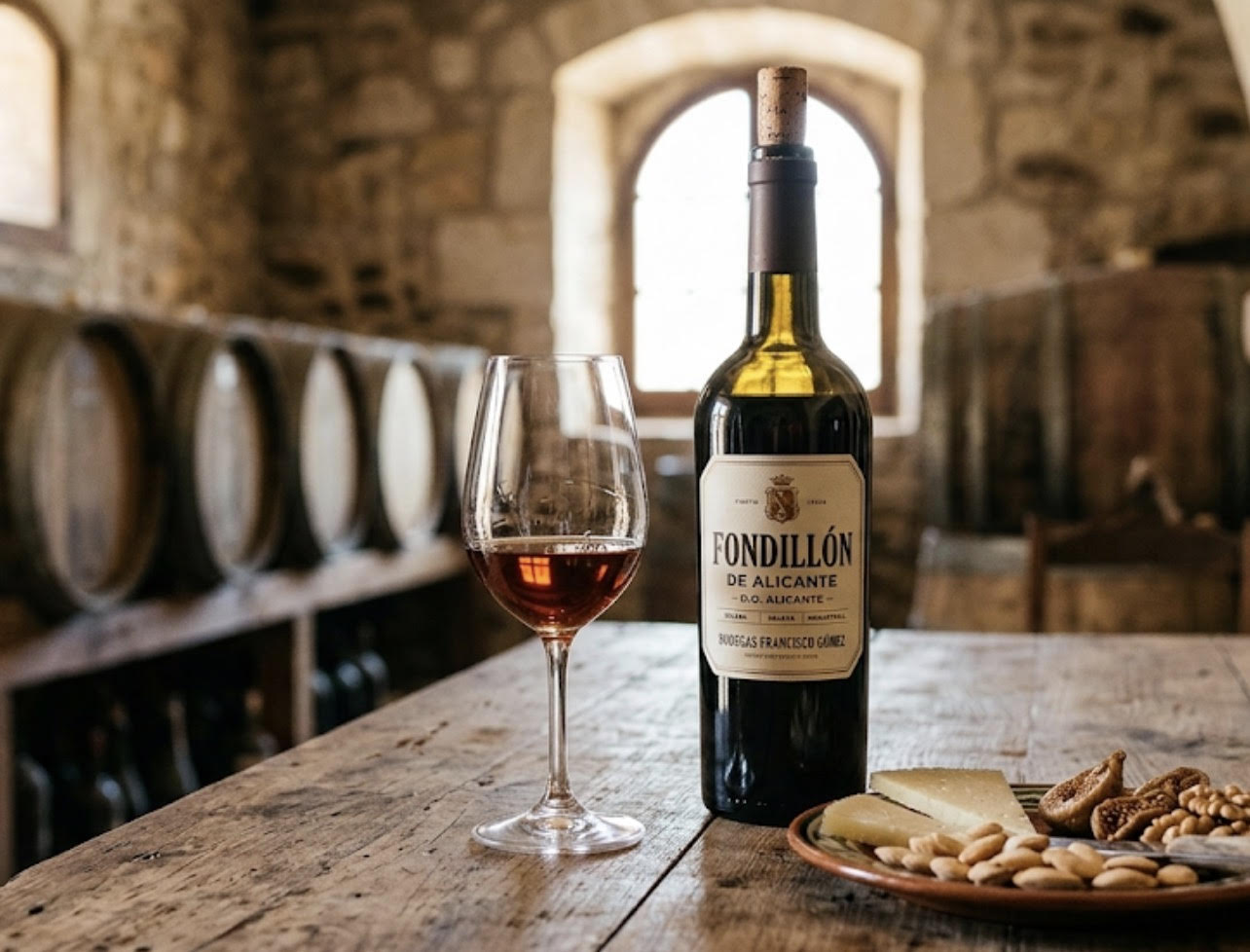
It is called Fondillón. It comes from the Alicante DO, on Spain’s Mediterranean coast. And it has been made — in essentially the same way — for over five hundred years.
A Wine Lost in Time
The earliest written records of Fondillón date to the 16th century, though the wine’s origins are almost certainly older. By the 1600s, it was one of the most prized wines in Europe. Historical accounts place it at the court of Louis XIV of France, who reportedly favoured it above all other sweet wines. It was exported to England, the Netherlands, and the Americas. Spanish royalty kept it in their cellars. Ships carried it across the Atlantic.
Alexander Dumas mentioned it in The Count of Monte Cristo. It appears in records of the Vatican cellars. Shakespeare’s contemporary Ben Jonson referred to wines from Alicante in terms that almost certainly describe Fondillón. The naval records of the Spanish Armada list it among provisions for officers. For centuries, it was one of the most famous wines in the Western world.
For centuries, Fondillón was to Alicante what Port is to Porto, what Tokaji is to Hungary, what Sherry is to Jerez — the defining, iconic wine of its region. A liquid identity. A currency of diplomacy and prestige.
Then, slowly, the world forgot.
The phylloxera epidemic of the late 19th century devastated Alicante’s vineyards. Two world wars disrupted trade routes. The Spanish Civil War brought further destruction to the region’s agricultural infrastructure. By the mid-20th century, Alicante had largely pivoted to bulk wine production, and Fondillón — expensive to make, slow to mature, difficult to sell in a market that had forgotten its name — was abandoned by all but a handful of stubborn, visionary producers.
Today, fewer than ten bodegas still make authentic Fondillón. Total annual production across all producers is negligible — a few thousand bottles in a good year. For context, a single mid-sized Bordeaux château might produce 200,000 bottles annually. The entire global output of Fondillón would not fill a single shipping container.
It is, by any definition, one of the rarest wines on earth.
How Fondillón Is Made
What makes Fondillón extraordinary — and what distinguishes it from virtually every other dessert or sweet wine in the world — is its method of production. Every step is designed to concentrate flavour through patience rather than intervention.
Step 1: Overripe Monastrell
The base grape is always Monastrell (known as Mourvèdre in France and Mataro in Australia), grown in the warm inland valleys of the Alicante DO — particularly around Villena, Monóvar, Pinoso, and the hills behind Benidorm.
The grapes are left on the vine far beyond normal ripeness — often until late October or November — until they are semi-raisined, shrivelled, and intensely concentrated with sugar. The Mediterranean sun does the work slowly, patiently, day after day, drawing water from the berries and leaving behind an almost syrupy concentration of flavour.
This is not the same as noble rot (botrytis cinerea) used in Sauternes or Tokaji. There is no fungal intervention. It is not the same as the passito method used in Amarone or Vin Santo, where grapes are dried after harvest on mats or racks. The concentration comes purely from the sun, the wind, and extended time on the vine — the grape slowly transforming while still attached to the living plant.
The yields are, predictably, minuscule. A vineyard that might produce a normal crop of red wine will yield a fraction of that volume as Fondillón grapes. This alone makes the wine economically challenging to produce.
Step 2: Natural Fermentation — No Fortification
Here is the critical distinction — the fact that separates Fondillón from virtually every other wine in its category:
Fondillón is not a fortified wine.
Unlike Port, unlike Sherry, unlike Madeira, unlike Marsala — no grape spirit is added at any point during production. The grapes arrive at the winery with such extreme sugar levels that fermentation naturally produces 16% alcohol or higher before the yeast exhausts itself and dies, leaving significant residual sugar behind.
This is wine in its purest, most concentrated form. Nothing added. Nothing removed. No external alcohol. No technological shortcuts. Just grape, sun, and time.
This is what makes Fondillón almost unique in the wine world: a naturally sweet, high-alcohol wine made without any fortification whatsoever. It is among the very few wines on earth that achieves this naturally.
The only comparable wines in this respect are certain exceptional late-harvest wines from extremely warm climates — but none of them undergo the extended ageing that gives Fondillón its extraordinary complexity.
Step 3: Decades of Ageing — The Solera System
After fermentation, the young Fondillón enters a solera system — the same fractional blending method used for Sherry in Jerez.
For those unfamiliar with the concept: barrels are arranged in tiers (called criaderas). Wine is drawn for bottling from the oldest tier (the solera — the barrels on the ground floor). Those barrels are then topped up with wine from the next-oldest tier, which is in turn topped up from the tier above, and so on, with the youngest wine entering at the top.
The result is that every bottle of Fondillón contains a blend of wines spanning decades. The system ensures continuity and complexity — older wines educate younger wines, and the blend achieves a depth and nuance that no single vintage could match.
A solera established in the 1960s means that traces of sixty-year-old wine are present in every glass poured today. A solera from the 1940s — which exists at certain producers — means you are tasting, in part, a wine made during the Second World War.
Minimum legal ageing: 10 years. But the finest examples — such as those from Enrique Mendoza in Alfàs del Pi and Primitivo Quiles in Monóvar — contain wine with an average age of 25 to 50 years.
Think about that. The wine in your glass has been slowly transforming in oak for a quarter of a century. In some cases, for half a century. In a world obsessed with novelty and immediacy, Fondillón is a monument to patience.
What Does Fondillón Taste Like?
Describing Fondillón is like describing a cathedral — the scale and detail resist easy summary. It is not a wine of simple flavours but of layered, evolving complexity that unfolds over minutes and hours. But here is an attempt:
Appearance: Deep amber to dark mahogany, sometimes approaching the colour of old cognac. Viscous, almost syrupy legs that cling to the glass and descend with painful slowness. The colour alone tells you that time has done its work.
Nose:
- Dried fig, Medjool date, prune compote
- Roasted walnut, hazelnut, toasted almond
- Bitter orange marmalade, candied citrus peel
- Toffee, butterscotch, salted caramel
- Old leather, saddle, cigar box
- Beeswax, sandalwood, cedarwood
- Coffee, dark chocolate, roasted cocoa nib
- Dried roses, potpourri, dried lavender
- A distinctive rancio character — that complex, oxidative nuttiness found in very old Sherry, Madeira, and aged Banyuls. It is a scent of time itself — impossible to fake, impossible to rush.
Palate:
- Dense and unctuous, but never cloying — this is the great surprise
- Profound sweetness balanced by an almost startling acidity — this is the key to Fondillón’s greatness, the wire of tension that prevents it from collapsing into syrupy excess
- Flavours of dried fruit, tobacco, liquorice, prune, and bitter chocolate weave through rancio notes of toffee, oxidised nuts, and caramel
- A texture like liquid velvet — heavy but not thick, rich but not sticky
- Extraordinary concentration that fills every corner of the mouth
Finish:
- Seemingly endless — two, three minutes or more after swallowing
- Echoes of caramel, fig, tobacco, salted almond, and dark spice
- A wine that stays with you long after the glass is empty — not just on the palate, but in the memory
“There are wines you taste, and wines you experience. Fondillón belongs to the second category. It is not a drink. It is an event.”
Fondillón vs Other Great Sweet & Fortified Wines
To understand Fondillón’s place in the world, it helps to compare it with other legendary sweet and fortified wines:
| Wine | Region | Method | Fortified? | Typical Ageing | Key Grape |
|---|---|---|---|---|---|
| Fondillón | Alicante, Spain | Sun-dried on vine, solera | ❌ No | 10–50+ years | Monastrell |
| Sherry (PX/Oloroso) | Jerez, Spain | Various, solera | ✅ Yes | 5–30+ years | Palomino / PX |
| Port (Tawny) | Douro, Portugal | Fortified, barrel-aged | ✅ Yes | 10–40+ years | Touriga Nacional etc. |
| Madeira | Madeira, Portugal | Fortified, estufagem/canteiro | ✅ Yes | 5–100+ years | Sercial / Verdelho / Bual / Malmsey |
| Tokaji Aszú | Tokaj, Hungary | Botrytised, barrel-aged | ❌ No | 3–25+ years | Furmint |
| Sauternes | Bordeaux, France | Botrytised, barrel-aged | ❌ No | 5–50+ years | Sémillon / Sauvignon Blanc |
| Vin Santo | Tuscany, Italy | Dried grapes (passito), barrel-aged | ❌ No | 3–10+ years | Trebbiano / Malvasia |
| Banyuls | Roussillon, France | Fortified, barrel-aged | ✅ Yes | 5–30+ years | Grenache |
Fondillón’s closest relatives in terms of flavour profile are arguably old Tawny Port and Madeira — that same spectrum of caramel, nuts, dried fruit, and rancio complexity. But its lack of fortification makes it technically unique among them. And its solera ageing gives it a continuity and depth that single-vintage wines cannot replicate.
It is, in a very real sense, a category of one.
Who Still Makes Fondillón?
The guardians of this wine are few. Each brings a different interpretation, but all share the same commitment to preserving an irreplaceable tradition:
| Producer | Location | Notes | Approximate Average Age |
|---|---|---|---|
| Enrique Mendoza | Alfàs del Pi (near Benidorm) | The modern benchmark. Elegant, balanced, profoundly complex. | 25+ years |
| Primitivo Quiles | Monóvar | Historic producer. The “Gran Reserva” contains wine from soleras established in the 1940s. Possibly the oldest Fondillón commercially available anywhere. | 50+ years |
| Bodegas Monóvar | Monóvar | Traditional, rustic style. Deeply authentic. | 15–20 years |
| Salvador Poveda | Monóvar | Family estate. Good entry point to understanding the wine. | 10–15 years |
| MGWines (Finca Collado) | Villena area | Newer producer actively working to revive the tradition for a modern audience. | 10–15 years |
| Cooperativa La Bodega de Pinoso | Pinoso | Cooperative production. More accessible, everyday style. | 10+ years |
Total estimated global production across all producers: fewer than 10,000 bottles per year. For further context: Château d’Yquem alone produces roughly 65,000 bottles annually. The entire Fondillón category is smaller than many individual wine estates.
How to Serve Fondillón
Fondillón is not a wine you open casually. It is a wine that rewards attention, intention, and the right conditions.
| Detail | Recommendation |
|---|---|
| Temperature | Slightly cool — 14–16°C. Not fridge-cold (which mutes the aromatics), not room temperature (which amplifies the alcohol). A brief spell in the fridge, then out 15 minutes before serving. |
| Glass | A small tulip glass or copita — the same kind used for Sherry or brandy. You do not need a large glass. The wine is intensely concentrated, and a smaller glass focuses the extraordinary aromatics. |
| Quantity | 50–75ml per serving. This is a meditation wine, not a quaffing wine. A standard 50cl bottle serves 6–8 people generously. |
| When | After dinner. With dessert. Or entirely on its own, as a contemplative nightcap — the last wine of the evening, when conversation slows and candles burn low. |
| Decanting | Not necessary. The solera system has already done decades of micro-oxygenation. |
| Storage after opening | This is the beauty of Fondillón: once opened, it lasts for months — even years. The high alcohol, residual sugar, and decades of oxidative ageing mean it is virtually indestructible. You can keep an open bottle in a cool cupboard for six months without any deterioration. In fact, some argue it improves slightly with air. |
Food Pairing
Fondillón is magnificent on its own, but it also creates extraordinary pairings with specific foods:
| Pairing | Why It Works |
|---|---|
| Dark chocolate (70%+) | The wine’s caramel and coffee notes bridge directly to the chocolate’s cocoa and bitterness. Sweetness meets sweetness. One of the great pairings. |
| Blue cheese (Valdéon, Roquefort, Cabrales, Stilton) | The salt and pungency of the cheese are tamed by the wine’s sweetness. The rancio complexity adds depth. Extraordinary. |
| Foie gras | Richness meets richness, with the wine’s acidity cutting through the fat. A luxury pairing of the highest order. |
| Dried fruits and nuts | Almonds, walnuts, dried figs, dates — mirrors the wine’s own flavour profile. Simple and perfect. A plate of Marcona almonds and dried figs alongside Fondillón is one of the most satisfying things you can serve. |
| Turrón de Jijona | The traditional soft almond nougat of Alicante — made just kilometres from where the wine is produced. A local pairing that transcends geography and becomes almost spiritual. Almond, honey, sugar, and Fondillón — a taste of the land itself. |
| Crème brûlée | Caramel meeting caramel. The torched sugar crust echoes the wine’s toffee notes. |
| Aged hard cheese (Manchego, old Gouda) | Umami and sweetness in beautiful tension. |
| Nothing at all | Sometimes the best pairing is silence, a comfortable chair, low light, and time. Fondillón does not need food. It is complete in itself. |
Why Fondillón Matters
Fondillón is more than a wine. It is a cultural artefact — a living link to a Europe that existed before phylloxera, before industrialisation, before globalisation flattened the world’s wine list into a familiar rotation of Cabernet, Merlot, Sauvignon Blanc, and Pinot Grigio.
Every bottle contains liquid history. The solera system means that wine made decades ago — from vines that may no longer exist, by hands that are no longer living — is still present in the glass today. It is, in the most literal sense, a wine that transcends time. When you taste Fondillón, you are tasting not a single moment, but an accumulation of moments stretching back through the decades.
And it is on the edge of disappearing.
The producers who still make Fondillón are few, and several are ageing without clear succession plans. The economics are brutal: grapes left to overripen on the vine produce a fraction of normal yields. The wine must then age for a minimum of ten years — and ideally far longer — before it can be sold. Capital is locked up for decades. The market barely knows the wine exists. Young consumers have never heard its name.
The Alicante DO has taken steps to protect the designation, and there are encouraging signs — a handful of newer producers have begun making Fondillón, and international wine media is slowly starting to pay attention. But the window is narrow. The tradition hangs by a thread.
If we lose Fondillón, we lose something irreplaceable — not just a wine, but a piece of European heritage that has survived for half a millennium against extraordinary odds. It has survived phylloxera. It has survived civil war. It has survived the indifference of the modern market. Whether it can survive the next generation remains to be seen.
Seek it out. Taste it. Tell someone about it. Buy a bottle and share it with friends who care about wine, about history, about the persistence of beautiful things in an impatient world.
That is how wines survive.
Where to Find It
Fondillón is not widely distributed. Your best options:
| Source | Notes |
|---|---|
| Directly from producers | Visit the bodegas in person — Monóvar, Alfàs del Pi, Villena. Most sell from their cellar doors. |
| Spanish wine specialists | Online retailers specialising in Spanish wine increasingly stock Fondillón. Search by producer name. |
| Fine wine merchants | Berry Bros & Rudd, The Whisky Exchange, and similar specialists occasionally carry it. |
| Auction | Older bottlings from Primitivo Quiles sometimes appear at auction. |
| Restaurants in Alicante | Some restaurants in the Alicante province serve it by the glass — a rare luxury. Ask specifically. |
Price: Expect to pay €25–80 for most bottlings. For a wine with 25+ years of average age, made in quantities of a few thousand bottles, this is extraordinarily — almost absurdly — good value. A 20 Year Old Tawny Port costs the same or more. A comparable Madeira costs significantly more. The market has simply not yet discovered Fondillón’s worth.
This will not last.
Tim Morgan is a London-based sommelier and wine writer. He holds the WSET Diploma and is currently pursuing the Master of Wine.