

By Tim Morgan, Senior Sommelier & Contributing Editor
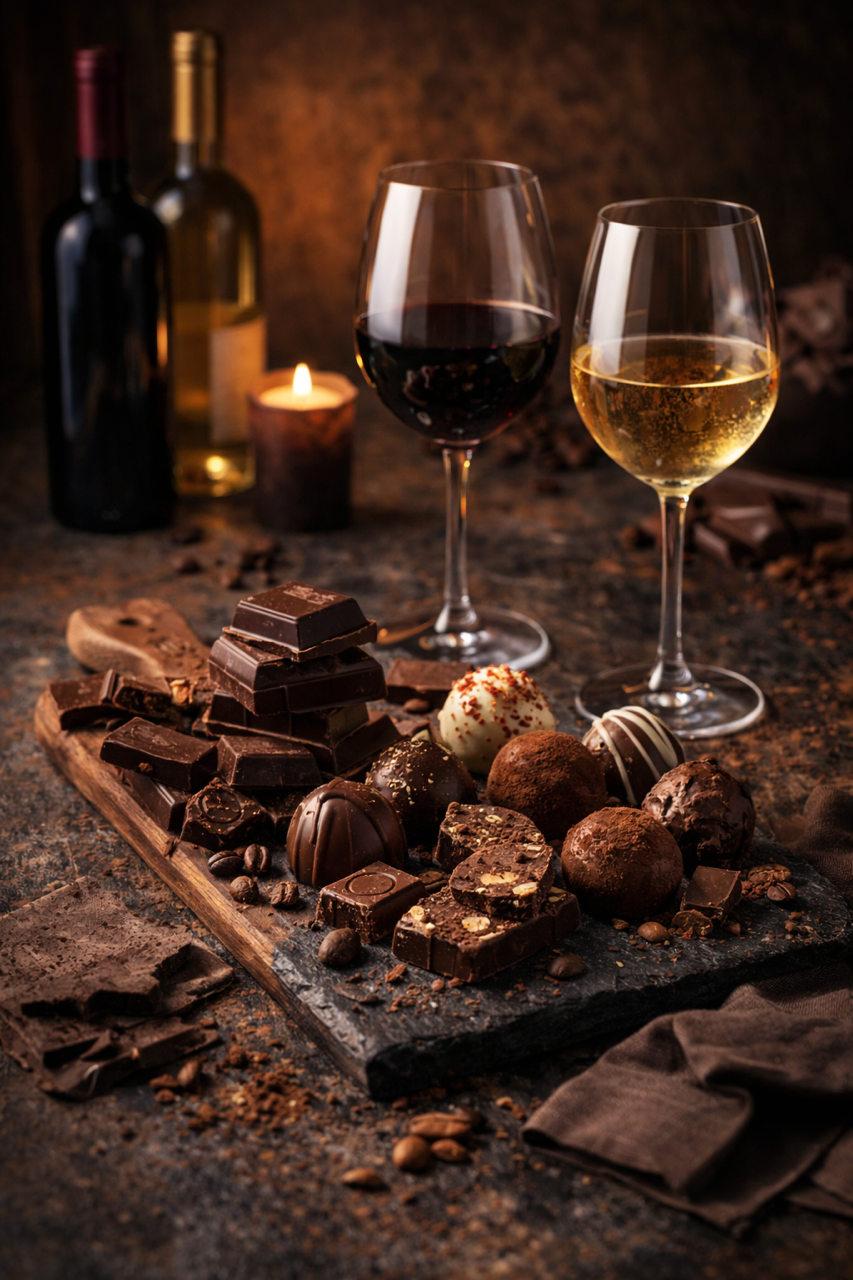
Wine and chocolate. In theory, it sounds irresistible — two of the most complex, sensually satisfying substances on earth, combined in a single moment of indulgence.
In practice, it is a minefield.
The problem is that chocolate does terrible things to most wines. Its bitterness amplifies tannin. Its sweetness makes dry wines taste sour. Its fat coats the palate and mutes delicate flavours. Its intensity bulldozes anything subtle.
Most red wines — including many that claim to “go with chocolate” — taste metallic, thin, and miserable alongside serious dark chocolate. The pairing has been romanticised to death and understood almost not at all.
But when it works — when the right wine meets the right chocolate — the result is extraordinary. A synthesis of flavour that neither could achieve alone.
Here is how to get there.
The Rules
Rule 1: The Wine Must Be Sweeter Than the Chocolate
This is the most important rule. If the chocolate is sweeter than the wine, the wine will taste acidic, thin, and hollow. The wine’s sweetness must match or exceed the chocolate’s sweetness.
textMilk chocolate (very sweet)  →  Very sweet wine (PX, Recioto)
Dark 55% (moderately sweet)  →  Medium-sweet wine (Tawny Port, Banyuls)
Dark 70% (bittersweet)       →  Off-dry to medium-sweet (Fondillón, Maury)
Dark 85%+ (very bitter)      →  Fortified, oxidative (Oloroso, Madeira)
100% cacao (no sugar)        →  Almost impossible. Try Amontillado Sherry.
Rule 2: Match Intensity
A delicate Moscato d’Asti will be destroyed by 85% dark chocolate. An aged Tawny Port will overwhelm a piece of white chocolate. Match the power of the wine to the power of the chocolate.
Rule 3: Look for Flavour Bridges
The best pairings create connections between shared flavour compounds:
| Flavour in Chocolate | Wine with Same Note |
|---|---|
| Coffee, espresso | Aged Tawny Port, Fondillón, Madeira |
| Caramel, toffee | Oloroso Sherry, Tawny Port |
| Dried fruit | PX Sherry, Recioto, Vin Santo |
| Nuts | Amontillado Sherry, Vin Jaune |
| Spice (cinnamon, vanilla) | Banyuls, Maury, Grenache-based dessert wines |
| Red berries | Brachetto d’Acqui, Recioto della Valpolicella |
| Smoke, leather | Madeira (Malmsey), aged Port |
The Pairings
🍫 Milk Chocolate
Character: Sweet, creamy, mild, vanilla, caramel.
| Wine | Why It Works |
|---|---|
| Moscato d’Asti | Light, gently sweet, low alcohol — the bubbly sweetness complements without competing |
| Pedro Ximénez Sherry | Intensely sweet, raisined, unctuous — matches milk chocolate’s sweetness note for note |
| Rutherglen Muscat | Australian fortified dessert wine — toffee, raisin, orange peel — gorgeous with milk chocolate |
| Ruby Port (basic) | Simple, fruity, sweet — an easy, crowd-pleasing pairing |
🍫 Dark Chocolate (55–65%)
Character: Moderately sweet, cocoa-rich, smooth, hints of fruit and vanilla.
| Wine | Why It Works |
|---|---|
| Banyuls (Roussillon) | Grenache-based vin doux naturel — red fruit, chocolate, spice. The benchmark chocolate pairing in French gastronomy. |
| Maury (Roussillon) | Banyuls’ neighbour — slightly more structured, equally magnificent with chocolate |
| Recioto della Valpolicella | Sweet red from Veneto — cherry, chocolate, spice. Italian perfection. |
| Tawny Port (20 Year) | Caramel, nuts, dried fruit — the oxidative complexity mirrors the chocolate’s cocoa notes |
The perfect bite: A square of 60% dark chocolate from a single-origin Venezuelan bean, with a small glass of Banyuls Grand Cru. The chocolate melts. The wine follows. They meet somewhere in the middle — a shared language of cocoa, spice, and dark fruit.
🍫 Dark Chocolate (70–80%)
Character: Bittersweet, intense, less sugar, pronounced cocoa, earthy, sometimes fruity or smoky depending on origin.
| Wine | Why It Works |
|---|---|
| Fondillón | Our mythical Alicante wine. The rancio complexity — caramel, walnut, fig — creates extraordinary flavour bridges with high-cocoa chocolate. |
| Oloroso Sherry | Dry but rich, nutty, oxidative — the bitterness of the chocolate is tempered by the wine’s weight and complexity |
| Madeira (Bual or Malmsey) | Caramel, toffee, burnt sugar, acidity — the acidity is key, cutting through the chocolate’s fat |
| Maury Vintage (aged) | More structured, more complex than young Maury — handles the bitterness beautifully |
| Amarone | Not sweet, but so rich and concentrated that it holds its own against intense dark chocolate. Dried cherry + bitter cocoa = compelling. |
🍫 Dark Chocolate (85%+)
Character: Intensely bitter, very low sugar, raw cocoa power, astringent, earthy, smoky.
This is the hardest pairing in the chocolate world. The bitterness is extreme. Most wines will be overwhelmed.
| Wine | Why It Works |
|---|---|
| Amontillado Sherry | Dry, nutty, oxidative, with enough complexity and weight to stand beside extreme bitterness |
| Palo Cortado Sherry | Richer than Amontillado — combines nuttiness with a Merlot-like roundness that softens the chocolate’s edge |
| Old Madeira (Verdelho, Bual) | Decades of ageing create a complexity and acidity that can match almost anything |
| Armagnac (or Cognac) | Not wine, strictly speaking — but barrel-aged brandy may be the single best partner for 85%+ chocolate. The oak, the fruit, the warmth, the sweetness. |
🍫 White Chocolate
Character: Very sweet, buttery, vanilla, cream, no cocoa solids.
White chocolate is not technically chocolate — it contains cocoa butter but no cocoa solids. Its sweetness and creaminess make it easier to pair than dark chocolate, but it still demands sweet wines.
| Wine | Why It Works |
|---|---|
| Sauternes | Honey, apricot, vanilla — mirrors white chocolate’s sweetness with infinitely more complexity |
| Tokaji Aszú | Botrytised sweetness and acidity — beautiful with white chocolate and tropical fruit |
| Ice Wine (Eiswein) | Intensely sweet, very acidic — cuts the richness |
| Moscato d’Asti | Light, fizzy, peachy — playful and delightful |
🍫 Chocolate Desserts
| Dessert | Wine | Why |
|---|---|---|
| Chocolate fondant / lava cake | Banyuls Grand Cru | Warm, gooey chocolate = warm, generous Grenache dessert wine |
| Chocolate mousse | Champagne (Demi-Sec) | Airy mousse + bubbles = textural magic. Sweetness in the Champagne matches the dessert. |
| Chocolate tart | 20 Year Tawny Port | Dense, rich tart = nutty, complex, concentrated Port |
| Profiteroles | Recioto della Valpolicella | Pastry + chocolate sauce + cream = sweet, fruity Italian red |
| Chocolate soufflé | Maury Vintage | Delicate, elevated chocolate = elegant, aged dessert wine |
| Chocolate truffles | Cognac, Armagnac, aged Rum | The after-dinner classic. Spirit + truffle = pure indulgence. |
| Brownies | Ruby Port, Zinfandel (late harvest) | Fudgy, sweet, casual — match the mood |
| Chocolate ice cream | PX Sherry (drizzled on top) | Pour the PX directly over the ice cream. Trust me. |
What Does NOT Work
| Wine | With Chocolate | Why It Fails |
|---|---|---|
| Cabernet Sauvignon | Any chocolate | Tannin + chocolate bitterness = metallic horror |
| Dry Champagne (Brut) | Dark chocolate | Not sweet enough. Tastes sour. |
| Sauvignon Blanc | Any chocolate | Too lean, too herbal. Complete mismatch. |
| Pinot Grigio | Any chocolate | Too neutral. Disappears. |
| Chianti | Any chocolate | High acid + tannin + chocolate bitterness = disaster |
Tim Morgan is a London-based sommelier and wine writer.