

By Tim Morgan, Senior Sommelier & Contributing Editor
There is a cruel irony at the heart of Riesling’s story.
It is, by virtually unanimous professional consensus, the greatest white wine grape in the world. It produces wines of extraordinary purity, complexity, and longevity. It is more terroir-transparent than Chardonnay, more aromatically complex than Sauvignon Blanc, more versatile with food than either. It ages magnificently — fifty, sixty, seventy years in the best cases. It spans the entire spectrum of sweetness, from bone-dry to lusciously sweet, and excels at every point.
And yet — astoundingly, maddeningly, tragically — most people don’t drink it.
The reasons are well documented: the legacy of cheap, sweet German wines (Liebfraumilch) that flooded the market in the 1970s and ’80s, poisoning Riesling’s reputation for a generation. The confusion over sweetness levels — is this one dry or sweet? — that makes consumers hesitant. The unfamiliar, Gothic-script German labels that look impenetrable to English-speaking buyers.
The result: Riesling remains the most admired wine among professionals and the most ignored wine among the public. It is the sommelier’s grape — beloved by those who know wine deeply, overlooked by almost everyone else.
This guide is an attempt to change that. Because if you are not drinking Riesling, you are missing one of the greatest pleasures the wine world has to offer.
Identity Card
| Detail | Info |
|---|---|
| Full name | Riesling |
| Colour | White |
| Origin | Rhine region, Germany — documented since 1435 |
| Skin | Thick for a white grape — contributes to disease resistance and aromatic complexity |
| Ripening | Late |
| Climate | Cool to moderate — thrives in marginal climates where other grapes struggle |
| Acidity | Extremely high — Riesling’s defining structural characteristic |
| Body | Light to medium |
| Alcohol | Typically low — 7.5% to 13% depending on style |
| Ageing potential | Exceptional — among the longest-lived white wines in the world (20–60+ years) |
| Sweetness range | From bone-dry to intensely sweet — the full spectrum |
| Key character | Purity, acidity, transparency, aromatic intensity, terroir expression |
What Does Riesling Taste Like?
Riesling’s aromatic profile is among the most vivid, most complex, and most recognisable of any grape variety. It is, in the best sense, unmistakable.
PRIMARY AROMAS (fruit & floral)
├── Green apple (the signature note in cool climates)
├── Lime, lemon
├── White peach
├── Apricot
├── Nectarine
├── Pear
├── Jasmine, orange blossom
├── Honeysuckle
└── Grapefruit (especially in Australian Riesling)

MINERAL NOTES
├── Slate / wet stone (Mosel)
├── Flint / gunflint (Alsace)
├── Chalk (Rheingau)
├── Petroleum / kerosene (aged Riesling — see below)
└── Saline / crushed shells

AGED RIESLING (5–20+ years)
├── Petrol / kerosene / petroleum (THE aged Riesling marker)
├── Honey
├── Toast
├── Dried apricot
├── Marmalade
├── Lanolin
├── Mushroom
├── Ginger
└── Smoke
The Petrol Note
Yes, we need to talk about petrol.
Aged Riesling develops a distinctive aroma often described as petroleum, kerosene, or petrol — a waxy, mineral-tinged scent that is, to the uninitiated, bizarre and off-putting, and to Riesling lovers, one of the most thrilling aromas in all of wine.
The compound responsible is TDN (1,1,6-trimethyl-1,2-dihydronaphthalene), which develops naturally as Riesling ages. It is not a fault. It is a feature — a hallmark of maturity and complexity that distinguishes great aged Riesling from all other white wines.
If you taste it and recoil, give it time. Every Riesling convert eventually learns to love the petrol note. It is an acquired taste — like truffle, like blue cheese, like all the best things in life.
The Sweetness Question
The single biggest barrier to Riesling enjoyment is confusion about sweetness levels. The German labelling system — while logical once you understand it — is notoriously opaque to newcomers.
Here is the simplified guide:
German Sweetness Indicators
DRY RIESLING:
Look for these words on the label:
├── "Trocken"           = Dry
├── "Grosses Gewächs" (GG) = Grand Cru equivalent — always dry
└── "Erste Lage"        = Premier Cru equivalent — usually dry

OFF-DRY RIESLING:
├── "Feinherb"          = Off-dry (producer's term, not legally defined)
├── "Halbtrocken"       = Half-dry
└── "Kabinett"          = Can be dry or off-dry depending on producer

SWEET RIESLING:
├── "Spätlese"          = Late harvest (can be dry or sweet — check)
├── "Auslese"           = Selected harvest — usually sweet
├── "Beerenauslese" (BA) = Botrytis-affected — very sweet
├── "Trockenbeerenauslese" (TBA) = Extremely sweet, extremely rare
└── "Eiswein"           = Ice wine — frozen grapes, intensely sweet
The shortcut: If the label says Trocken or GG, it’s dry. If it says Kabinett without Trocken, it’s probably off-dry. Anything from Spätlese upward may be sweet (check the producer’s style). BA, TBA, and Eiswein are always sweet dessert wines.
Alsace
Simpler: almost all Alsace Riesling is dry unless labelled Vendange Tardive (late harvest, sweet) or Sélection de Grains Nobles (botrytis, very sweet).
Australia, Austria, New Zealand
Almost always dry.
Where It Grows
🇩🇪 Germany — The Motherland
Germany is Riesling’s home and remains its greatest expression. The key regions:
| Region | Character | Signature |
|---|---|---|
| Mosel | Slate soils, steep terraces, ethereal wines. Low alcohol (7.5–11%). | Crystalline purity. Laser acidity. Slate minerality. The most delicate Rieslings in the world. |
| Rheingau | Warmer. Fuller-bodied. More structured. Historic estates. | Richer, more golden. Peach and apricot. Classic elegance. |
| Pfalz | Warmest German Riesling region. Riper, more generous. | Exotic fruit. Stone fruit. Power with precision. |
| Rheinhessen | Diverse. Increasingly exciting. Germany’s largest region. | From simple to profound. Great value. |
| Nahe | Volcanic and slate soils. Complex, mineral. | Aromatic intensity. Mineral depth. Undervalued. |
| Franken | Continental climate. Bone-dry. Earthy. | Sturdy, savoury, food-friendly. Distinctive flask-shaped bottles. |
Essential German producers:
| Producer | Region | Style |
|---|---|---|
| Egon Müller | Mosel | The greatest sweet Riesling producer on earth. Scharzhofberger TBA is wine’s Mona Lisa. |
| Joh. Jos. Prüm | Mosel | Classic. Delicate. Ethereal Kabinett and Spätlese. Legendary Wehlener Sonnenuhr. |
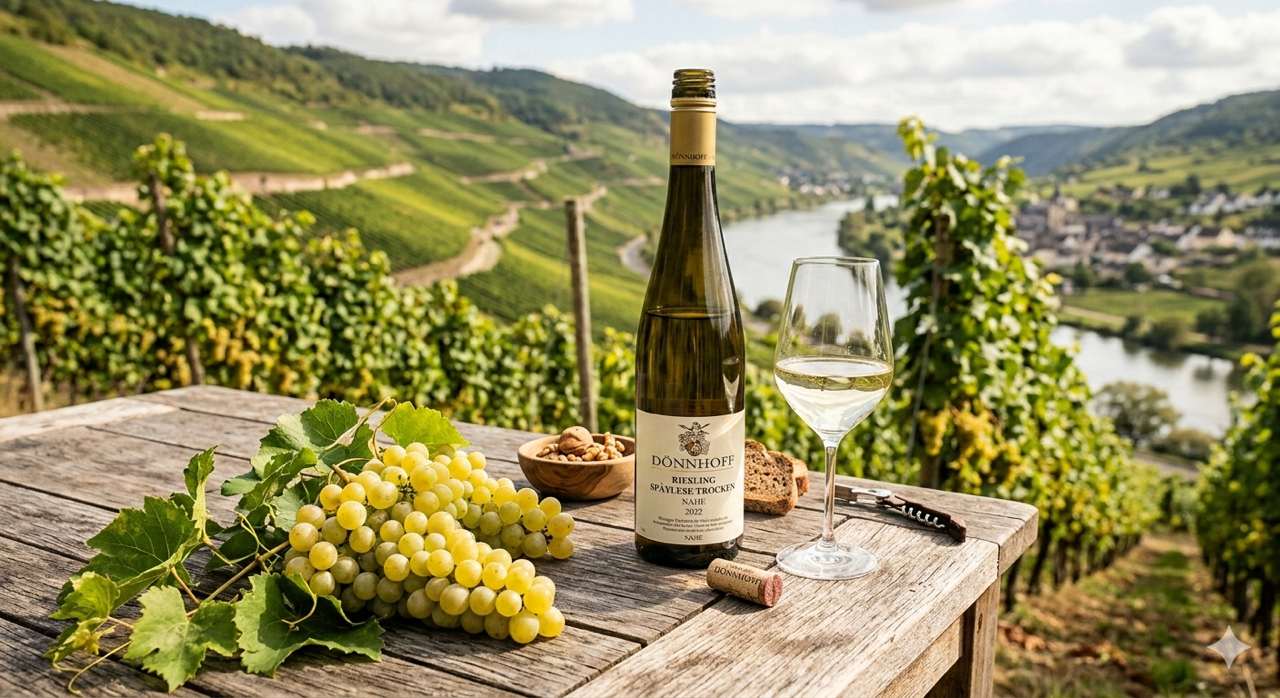
| Dönnhoff | Nahe | Mineral, precise, outstanding across the range. |
| Emrich-Schönleber | Nahe | Crystalline purity. Among the finest dry Rieslings anywhere. |
| Robert Weil | Rheingau | Rich, powerful, precise. Kiedrich Gräfenberg is world-class. |
| Klaus Peter Keller | Rheinhessen | Perfectionist. GG wines are among Germany’s finest. Cult status. |
| Maximin Grünhaus | Mosel (Ruwer) | Historic estate. Elegant, mineral, age-worthy. |
| Willi Schaefer | Mosel | Tiny production. Legendary off-dry wines. Near impossible to find. |
| Dr. Loosen | Mosel | Excellent quality-to-price ratio. Great ambassador for German Riesling. |
| Van Volxem | Mosel (Saar) | Biodynamic. Dry-focused. Mineral, precise. Modern classic. |
🇫🇷 Alsace — The French Interpretation
Alsace Riesling is the yin to Germany’s yang: where Mosel Riesling is delicate, low-alcohol, and sometimes off-dry, Alsace Riesling is full-bodied, dry, powerful, and mineral — a white wine of real stature and intensity.
The Grand Cru system (51 classified vineyards) provides a framework of terroir hierarchy, though producer quality varies significantly.
Essential producers: Trimbach (Clos Sainte Hune is legendary), Zind-Humbrecht, Weinbach, Albert Mann, Marcel Deiss, Josmeyer.
🇦🇹 Austria
Austrian Riesling — grown primarily in Wachau, Kamptal, and Kremstal — offers a style distinct from both Germany and Alsace: bone-dry, medium-bodied, with a stony, mineral intensity and a precise, focused acidity.
Wachau classifications: Steinfeder (light), Federspiel (medium), Smaragd (powerful, the finest).
Essential producers: F.X. Pichler, Knoll, Hirtzberger, Prager, Nikolaihof, Bründlmayer.
🇦🇺 Australia — Clare Valley & Eden Valley
Australian Riesling is one of the wine world’s great bargains — and one of its most distinctive styles. Clare Valley and Eden Valley (both in South Australia) produce bone-dry, lime-scented, mineral Rieslings that age beautifully and cost a fraction of their European equivalents.
Key difference: Australian Riesling tends toward lime and grapefruit rather than the peach and apple of German/Alsatian Riesling. Younger wines are taut and citric; with age (10–20 years), they develop the classic petrol note alongside honeyed toast and marmalade.
Essential producers: Grosset (Polish Hill is iconic), Jim Barry (The Lodge Hill), Pewsey Vale, Henschke (Julius), Mount Horrocks.
Riesling and Food — The Secret Weapon
Riesling’s combination of high acidity, aromatic intensity, and variable sweetness makes it arguably the most versatile food wine in the world. It excels where other wines fail:
| Food Category | Why Riesling Works |
|---|---|
| Spicy food (Thai, Indian, Sichuan, Korean) | Off-dry Riesling’s sweetness tames chilli heat. Acidity refreshes. Aromatics mirror spice. No other wine handles spice this well. |
| Asian cuisine broadly | Low alcohol, high acid, aromatic — Riesling is the Asian food wine par excellence. Japanese, Chinese, Vietnamese, Malaysian — all brilliant. |
| Pork | Riesling’s acidity cuts pork fat. Off-dry styles complement pork’s sweetness. The Alsatian classic: choucroute garnie with Riesling. |
| Smoked fish | Smoked salmon, trout, mackerel — dry Riesling’s acidity and minerality cut the smoke and oil. |
| Foie gras | Vendange Tardive Riesling with foie gras is an Alsatian tradition of extraordinary beauty. |
| Rich sauces | Cream sauces, beurre blanc — Riesling’s acidity balances richness without the weight of oaked Chardonnay. |
| Vegetables | Asparagus, artichokes, salads — dishes that destroy most red wines are Riesling’s playground. |
| Cheese | Washed-rind (Munster + Alsace Riesling is classic), semi-hard, aged. |
| Dessert | Spätlese and Auslese with fruit-based desserts. BA and TBA with crème brûlée, foie gras, or blue cheese. |
“If I were stranded on a desert island and could only drink one grape variety for the rest of my life, I would choose Riesling. Not because it is the ‘best’ — whatever that means — but because it does more things, with more foods, in more styles, at more price points, than any other grape on earth. Nothing else comes close.”
Tim Morgan is a London-based sommelier and wine writer.