

By Tim Morgan, Senior Sommelier & Contributing Editor
Wine and cheese. It sounds so simple. So natural. So obviously, universally correct that questioning it feels almost heretical.
And yet, for every transcendent moment — a sip of Sauternes dissolving into a crumble of Roquefort, a bite of aged Comté meeting a glass of Vin Jaune — there are a hundred mediocre ones. The dreamy Burgundy that turns metallic against a young goat cheese. The bold Cabernet that fights bitterly with Brie. The “cheese plate with red wine” default that persists in restaurants worldwide, despite being wrong at least half the time.
The truth is this: wine and cheese can be one of the greatest pairings in gastronomy. But only if you understand why they work — and why they so often don’t.
Why Cheese Is Difficult to Pair
Cheese presents challenges that most foods do not:
Fat. Cheese coats the palate with fat, which mutes flavours and creates a barrier between wine and taste buds. Wines need enough acidity or tannin to cut through.
Salt. Most cheeses are salted, which amplifies bitterness in tannic red wines. This is why heavy Cabernet and Brie is such a disaster — the salt in the cheese turns the tannins harsh and metallic.
Umami. Aged cheeses are loaded with umami — the savoury “fifth taste.” Umami intensifies bitterness and astringency in tannic wines while making fruity, sweet, or acidic wines taste better.
Intensity. A pungent Époisses and a delicate Chablis will obliterate each other. A mild mozzarella and a massive Barolo will never meet. Matching intensity is essential.
The Golden Rules
Before we get to specific pairings, three principles that will never fail you:
Rule 1: White Wine Pairs with Cheese Better Than Red Wine
This is the most important — and most ignored — truth in wine and cheese pairing.
The combination of acidity + moderate body + no tannin makes white wine inherently more compatible with cheese than red. White wine’s acidity cuts through fat, complements salt, and refreshes the palate. Red wine’s tannins clash with salt and are amplified by umami, creating bitterness.
This does not mean red wine never works with cheese. It means that white wine works more often, more easily, and with a wider range of cheeses.
“The next time someone tells you that red wine goes with cheese, ask them to try Chablis with Comté. Then watch their face.”
Rule 2: What Grows Together Goes Together
Regional pairings — wine and cheese from the same area — work with remarkable consistency:
| Wine | Cheese | Region |
|---|---|---|
| Sancerre | Crottin de Chavignol | Loire Valley |
| Vin Jaune | Comté | Jura |
| Chianti | Pecorino Toscano | Tuscany |
| Rioja | Manchego | Spain |
| Port | Stilton | Portugal / England |
| Champagne | Chaource / Langres | Champagne |
| Muscadet | Curé Nantais | Loire |
| Gewürztraminer | Munster | Alsace |
Centuries of coexistence have created natural affinities. Trust them.
Rule 3: Sweet Wines Are Cheese’s Best Friend
Sweetness in wine performs miracles with cheese:
- It balances salt (salt + sweet = harmony)
- It cuts richness (the acidity in sweet wines is often very high)
- It soothes pungency (strong cheeses are tamed by sweetness)
- It creates contrast that elevates both elements
The world’s greatest cheese pairings almost all involve sweet or off-dry wines:
- Sauternes + Roquefort
- Port + Stilton
- Tokaji + Blue cheese
- Vin Santo + Parmigiano Reggiano
- Riesling Spätlese + Époisses
The Pairing Guide — By Cheese Type
🧀 Fresh & Young Cheeses
Mozzarella, Burrata, Ricotta, Chèvre (young), Feta, Cream Cheese
Character: Mild, creamy, lactic, high moisture, low salt, delicate.
The challenge: These cheeses are so mild that bold wines overwhelm them. You need wines that are equally fresh and light.
| Wine Match | Why It Works |
|---|---|
| Sauvignon Blanc (Sancerre, Marlborough) | Zippy acidity mirrors the cheese’s freshness. Herbal notes complement young chèvre beautifully. |
| Vermentino | Light, citrusy, Mediterranean — perfect with burrata and tomatoes. |
| Prosecco | Bubbles cut cream. Simple, cheerful, correct. |
| Rosé (Provence) | Dry, fresh, versatile. The go-to summer pairing with feta or mozzarella salads. |
| Albariño | Saline, citric, bright — stunning with fresh goat cheese or ricotta. |
Avoid: Any tannic red. Any heavily oaked white. Any powerful wine. The cheese will disappear.
The perfect bite: Fresh burrata, torn open, drizzled with good olive oil and flaky salt, with a glass of chilled Vermentino from Sardinia. Summer in a single mouthful.
🧀 Soft-Ripened Cheeses
Brie, Camembert, Saint-Marcellin, Brillat-Savarin, Chaource
Character: Bloomy rind, creamy to oozing interior, buttery, mushroomy, earthy. Rich and coating.
The challenge: The richness and earthy funk of these cheeses clash with tannin. Red wine + Brie is one of the most common pairing mistakes in the world.
| Wine Match | Why It Works |
|---|---|
| Champagne | The ultimate. Bubbles and acidity slice through the cream. Toasty notes complement the mushroomy rind. Magnificent. |
| Chardonnay (Burgundy, unoaked or lightly oaked) | Acidity and subtle richness mirror the cheese. Village-level Burgundy + ripe Camembert = perfection. |
| Chenin Blanc (Vouvray demi-sec) | Off-dry Chenin + Brie is one of the great undiscovered pairings. The touch of sweetness balances the earthy funk. |
| Cider (dry, Normandy) | Not wine, but the regional classic. Camembert and dry cider is perhaps the most natural food pairing in France. |
| Pinot Noir (light, Burgundy) | The only red that works here — and only if it’s light, fresh, and low in tannin. Village Volnay or Chorey-lès-Beaune. Not Nuits-Saint-Georges. |
Avoid: Cabernet Sauvignon. Malbec. Barolo. Anything with serious tannin. The result will be metallic, bitter, and joyless.
The perfect bite: A perfectly ripe Brillat-Savarin — triple-cream, almost liquid — with Champagne Blanc de Blancs. Decadent, harmonious, unforgettable.
🧀 Washed-Rind Cheeses
Époisses, Munster, Taleggio, Pont-l’Évêque, Reblochon, Livarot
Character: Pungent, funky, meaty, barnyardy. Soft interior, orange-red rind. The “stinky” cheeses.
The challenge: These cheeses are intensely flavoured and aromatic. Delicate wines are destroyed. You need wines with enough personality to stand up — or enough sweetness to contrast.
| Wine Match | Why It Works |
|---|---|
| Gewürztraminer (Alsace) | The classic. Aromatic, off-dry, with enough intensity to match the funk. Gewürz + Munster is one of the all-time great pairings. |
| Riesling Spätlese | Off-dry, high acidity, floral — cuts through the richness while matching the intensity. |
| Pinot Gris (Alsace, rich style) | Full-bodied, slightly smoky — stands up to Époisses beautifully. |
| Marsanne/Roussanne (Rhône) | Rich, honeyed whites that can handle the power of washed rinds. |
| Burgundy (red, village level) | One of the few times red Burgundy + cheese genuinely works. The earthiness of Pinot meets the earthiness of Époisses. |
| Beer (Belgian Trappist) | Again, not wine — but the malt, carbonation, and gentle sweetness of a Chimay or Westmalle with Taleggio is world-class. |
Avoid: Sauvignon Blanc (too lean). Champagne (overwhelmed). Oaky Chardonnay (fights the funk).
The perfect bite: Époisses at room temperature — oozing, pungent, almost confrontational — with a glass of Gewürztraminer Grand Cru from Alsace. Beauty and the beast, in perfect harmony.
🧀 Semi-Hard Cheeses
Gruyère, Comté, Cantal, Gouda (young), Emmental, Fontina, Appenzeller
Character: Firm, nutty, buttery, sweet, complex. The great all-rounders.
The challenge: Honestly, not much. Semi-hard cheeses are the most wine-friendly category. Their balance of fat, salt, and nutty sweetness works with an enormous range of wines.
| Wine Match | Why It Works |
|---|---|
| Vin Jaune (Jura) | The mythical pairing. Comté + Vin Jaune is one of the five greatest food-and-wine matches on earth. The oxidative, nutty, curry-tinged wine meets the nutty, sweet, crystalline cheese in a union of absolute perfection. |
| Chardonnay (Burgundy, oaked) | The buttery richness of barrel-fermented Chardonnay mirrors the buttery sweetness of Comté or Gruyère. Beautiful. |
| Chenin Blanc (dry, Savennières) | Mineral, complex, with enough weight to match. Stunning with aged Comté. |
| Pinot Noir (Burgundy) | Works genuinely well here. The earthy complexity of Pinot complements the nuttiness of the cheese without any tannin clash. |
| Dry Sherry (Amontillado) | Nutty, oxidative, complex — mirrors aged Gouda or Comté beautifully. One of the great underrated pairings. |
| Riesling (dry, Alsace) | Acidity + minerality + a touch of richness. Excellent all-rounder. |
The perfect bite: 36-month Comté — dense, crystalline, almost crunchy with amino acid crystals — with a glass of Vin Jaune from the Jura. If you try only one pairing from this entire article, make it this one. It will change you.
🧀 Hard Aged Cheeses
Parmigiano Reggiano, Pecorino Romano, Aged Manchego, Aged Gouda (24+ months), Mimolette Vieille, Cheddar (aged), Idiazábal
Character: Intensely flavoured, crystalline, umami-rich, salty, complex. Often granular texture with crunchy amino acid crystals.
The challenge: High umami and salt make tannic wines taste harsh. But the intensity of flavour means you need wines with personality.
| Wine Match | Why It Works |
|---|---|
| Barolo / Barbaresco | One of the rare cases where a powerful red works. Nebbiolo’s high acidity and relatively fine tannins complement Parmigiano’s umami and salt rather than fighting them. Exceptional. |
| Amarone | Rich, raisined, slightly sweet — gorgeous with 48-month Parmigiano. The sweetness balances the salt. |
| Rioja Reserva | Tempranillo’s balance of fruit, acid, and moderate tannin is ideal with aged Manchego. The regional classic, and rightly so. |
| Vin Santo | Dipping Parmigiano in Vin Santo is a Tuscan tradition so perfect it feels like a natural law. Sweet, nutty, salty — three notes in perfect chord. |
| Oloroso Sherry | Dry, nutty, oxidative — a masterful pairing with aged Manchego or Idiazábal. |
| Champagne (aged, vintage) | The umami of aged Champagne meets the umami of aged Parmigiano. Savoury fireworks. |
Avoid: Young, fruity reds with no complexity. The cheese will make them taste hollow.
The perfect bite: A shard of 48-month Parmigiano Reggiano — crumbling, crystalline, explosively savoury — dipped in aged Aceto Balsamico Tradizionale, with a glass of Barolo. The holy trinity of Emilia and Piedmont.
🧀 Blue Cheeses
Roquefort, Stilton, Gorgonzola, Valdéon, Cabrales, Fourme d’Ambert, Danish Blue
Character: Pungent, salty, sharp, creamy or crumbly, intensely flavoured. The blue mould creates powerful, sometimes aggressive flavours.
The challenge: Extreme salt and pungency. Tannic reds are catastrophic. You need sweetness, sweetness, sweetness.
| Wine Match | Why It Works |
|---|---|
| Sauternes | The king of all cheese pairings. Roquefort + Sauternes is, for many sommeliers, the single greatest food-and-wine combination in existence. The honeyed sweetness, the piercing acidity, the botrytis complexity — everything meets the salty, tangy, creamy intensity of Roquefort in a union of almost unbearable perfection. |
| Port (Vintage or Tawny) | Stilton + Port is England’s gift to gastronomy. The sweetness and richness of Port tame the salt and pungency of the cheese. Tawny Port + Stilton is even better than Vintage — fight me. |
| Tokaji Aszú (5 Puttonyos) | Sweet, acidic, honeyed — extraordinary with any blue cheese. Hungary’s answer to Sauternes, and equally magnificent with Roquefort. |
| Monbazillac | Sauternes’ more affordable neighbour. Same principle, nearly the same result. Brilliant with Fourme d’Ambert. |
| Fondillón | Our beloved rarity from Alicante — the rancio complexity and natural sweetness are stunning with Valdéon or Cabrales. A Spanish pairing of mythical proportions. |
| Recioto della Valpolicella | Sweet red from Veneto — gorgeous with Gorgonzola dolce. The Italian instinct, as always, is correct. |
| PX Sherry | Intensely sweet, raisined, unctuous — overwhelming on its own, but perfectly balanced by the salt and tang of blue cheese. |
Avoid: Literally any dry red wine. Cabernet + Roquefort is an act of vandalism against both products.
The perfect bite: A trembling spoonful of Roquefort — salty, sharp, creamy, electric — followed by a sip of Sauternes. Close your eyes. This is why food and wine exist.
The Ultimate Cheese and Wine Table
For your next dinner party. Six cheeses, six wines, served in order of intensity:
| Order | Cheese | Wine | Notes |
|---|---|---|---|
| 1 | Fresh chèvre with herbs | Sancerre | Light, crisp, herbal — the aperitif course |
| 2 | Ripe Camembert | Champagne (Blanc de Blancs) | Bubbles + cream = elegance |
| 3 | Comté (24 months) | Vin Jaune | The mythical pairing |
| 4 | Parmigiano Reggiano (36 months) | Barolo | Power + umami + complexity |
| 5 | Époisses | Gewürztraminer Grand Cru | Funk meets perfume |
| 6 | Roquefort | Sauternes | The grand finale. Perfection. |
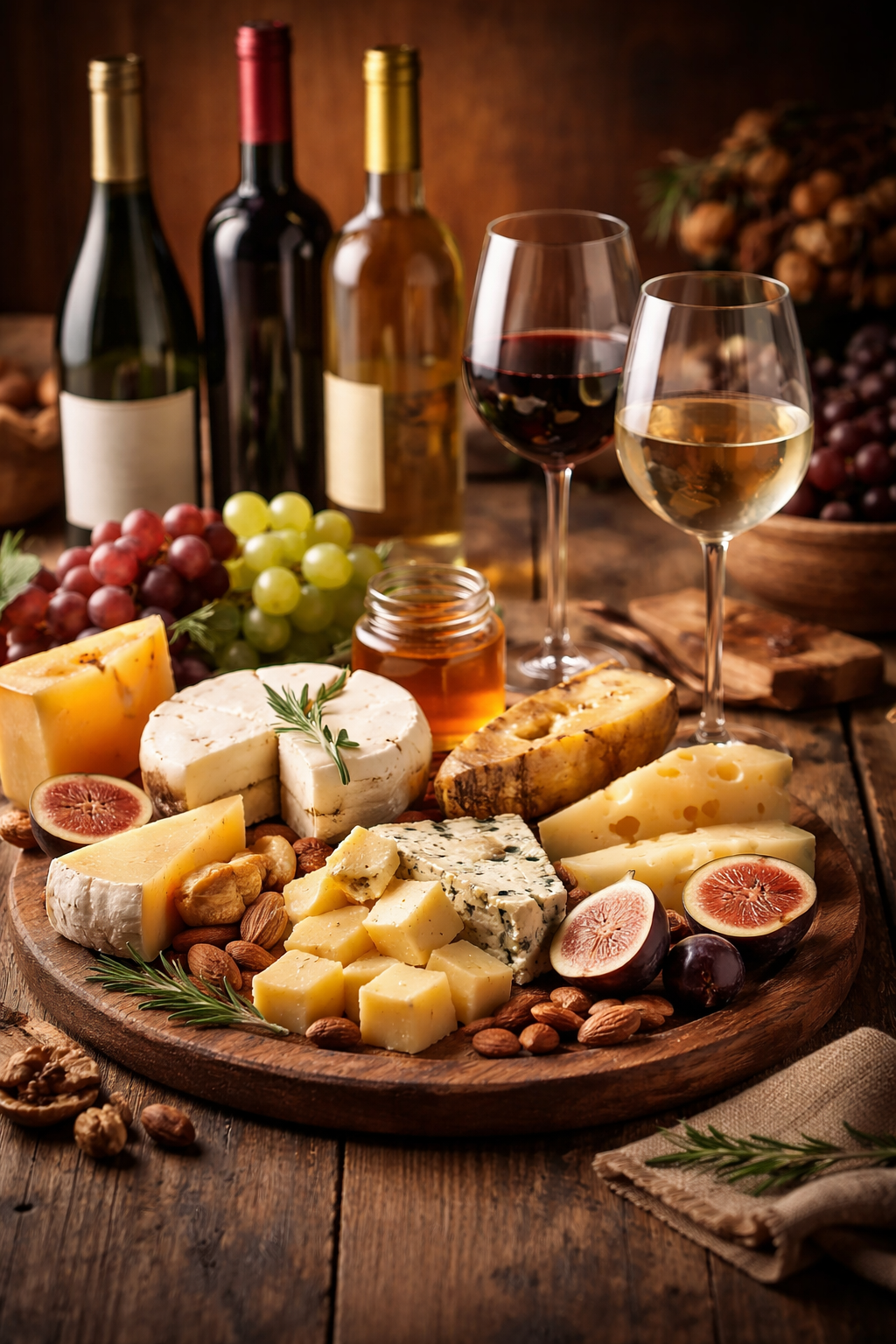
Serve with: good bread (sourdough, walnut bread, or pain de campagne), raw honeycomb, fresh and dried fruits (figs, pears, grapes, dates), and toasted nuts.
Tim Morgan is a London-based sommelier and wine writer.